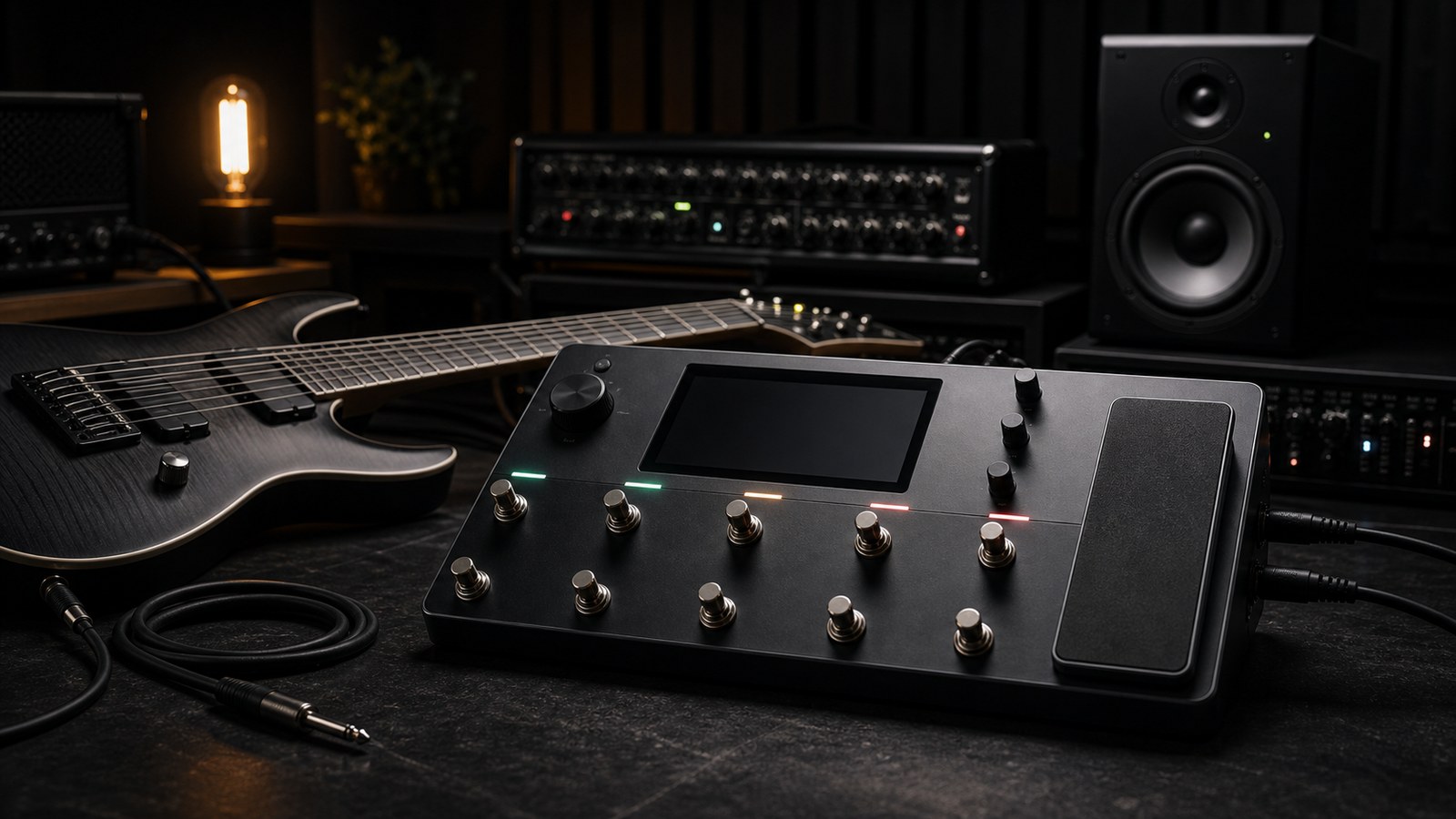
Modern metal is one of the genres the Quad Cortex was made for. The amps are precise, the cabs need to be tight without losing weight, and the noise floor needs to be invisible. Here is the chain we reach for when a project needs that contemporary, scooped-but-aggressive rhythm sound.
What “modern metal” actually means
Before we dial anything in, let us settle on a target. Modern metal here means the rhythm tone you hear on records by Periphery, Sleep Token, Spiritbox, Polyphia in their heavier moments, and the broader djent and post-prog wave. The shared characteristics are:
- High gain but tight low end
- A scooped midrange with a small upper-mid bump for clarity
- Aggressive picking response with very little compression
- Almost no audible noise floor between palm-muted notes
- Stereo width on the rhythm parts when there are two takes panned hard
If your target is older thrash or classic metal, this chain will get you most of the way but you will want to dial back the scoop and add a touch more midrange.
The chain we use
Top to bottom on the grid:
- Noise gate (input side)
- Tube Screamer-style overdrive
- High gain amp (capture or model)
- Cab block with a quality 4×12 IR
- Parametric EQ
- Optional: a touch of plate reverb on a parallel send
- Output
We will go through each block.
Block one: the input gate
A gate at the input of your chain, before the drive and amp, is non-negotiable for high-gain tones. Set the threshold so it kills the noise between your palm-muted notes but does not chop the tail of held chords.
Starting values: threshold around minus 50 to minus 45 dBFS, hold around 20 ms, release around 100 ms. Adjust the threshold while playing the tightest palm-muted gallop you can manage. If the gate kills your notes, raise the threshold by 3 dB and try again.
Some players prefer a second gate after the amp. We rarely bother. If your input gate is set right and your guitar is in good order, one gate is enough.
Block two: the drive
A Tube Screamer in front of a high-gain amp is the oldest trick in modern metal. The drive is not adding distortion. It is shaping the input to the amp by tightening the low end and pushing a bit more midrange into the gain stage.
Settings on the model or capture:
- Drive: low (around 9 o’clock, almost off)
- Tone: noon
- Level: full or slightly above unity
The “drive” knob is doing very little work here. The “level” knob is doing most of the work, slamming a bit more signal into the amp. If your overall gain feels too aggressive, lower the amp’s gain and raise the screamer’s level.
Block three: the amp
This is where personal taste rules. Common starting points for modern metal:
- 5150 or 6505 capture — the default modern metal amp
- Diezel VH4 capture — slightly more refined, scooped naturally
- Mesa Mark series capture — tighter low end, more chug
- Friedman BE100 — for a slightly older, more saturated flavour
Whichever you pick, start with these settings:
- Gain: around 6 to 7 out of 10. Modern metal amps are gainier than you think they need to be. Less gain often sounds heavier in the mix.
- Bass: 4 to 5
- Mids: 4 to 5
- Treble: 5 to 6
- Presence: 5 to 6
We have written “less gain than you think” deliberately. The single biggest mistake we see from new players is dimed gain. Back it off. The compression and aggression you are chasing comes from picking attack into a moderate-gain amp, not from a maxed gain knob.
Block four: the cab IR
This is the most important block for modern metal. A cab IR can rescue or ruin everything upstream of it.
What to look for in a modern metal cab IR:
- 4×12 source cabinet with a Greenback or V30 speaker
- Recorded with a SM57 close-mic and an MD421 mid-position
- Mixed IR rather than a single mic position, for natural body
Avoid IRs that are too bright or too scooped on their own. If your cab IR is doing all the EQ work for you, it leaves you no room to fit the guitar in a mix later.
Our preset packs ship with vetted cab IRs that we have tested in the mix, not just on solo guitar. That distinction matters.
Block five: the post EQ
A surgical EQ after the cab block lets you fix the small problems specific to your guitar. Common moves:
- High-pass at 90 Hz to remove sub-rumble that fights the bass guitar
- Slight cut around 250 Hz to clear up muddiness
- Small boost around 2.5 to 3 kHz for note articulation
- Slight cut around 4 kHz if the tone is fizzing
- Low-pass at 8 to 10 kHz to tame any digital edge
Use this EQ in service of the mix, not in isolation. A guitar tone that sounds thrilling on its own is often the wrong tone for the song.
A word on stereo
For rhythm guitars in a mix, double-track the same part with the same preset and pan hard left and right. Do not use stereo widening tricks on a single take. Two performances of the same part panned hard is what makes a record feel huge, not a mono signal artificially spread.
The Quad Cortex makes this easy because the dry signal is recorded alongside the wet signal. If your second take is not as tight as the first, you can re-amp the dry signal of the first take with a slightly different preset to fake a second performance.
A starting preset
If you want to skip the dialling and start playing, we have packs aimed at exactly this style. Look for “Modern Metal Rhythm” or any of our artist-style packs that target this territory.
Next post we swap genres entirely and build something nobody asks about often enough: a long, evolving ambient soundscape preset that uses the unit’s routing in ways most metal players never see.
Dialling In a Modern Metal Tone on the Quad Cortex