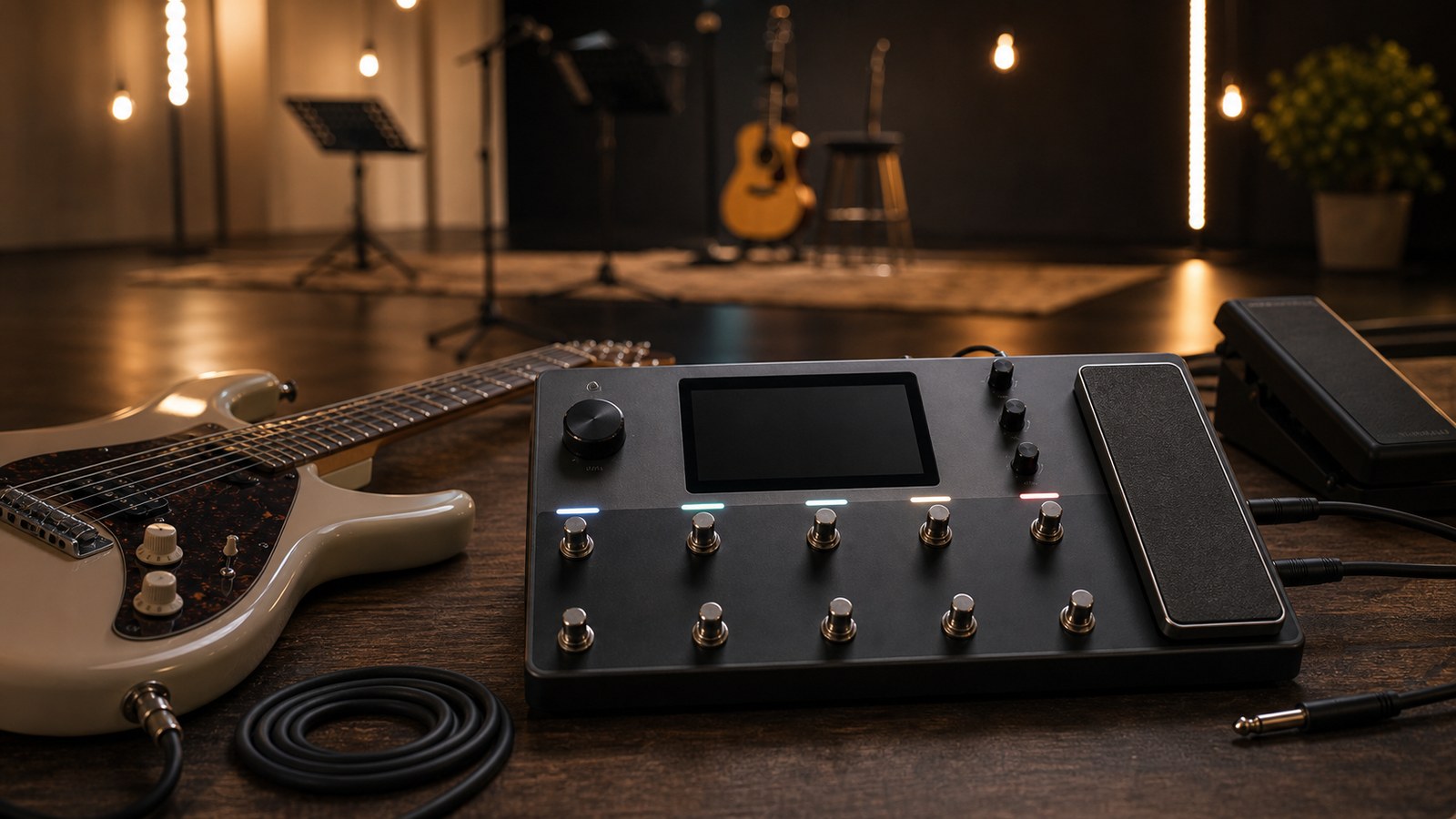
Worship guitar has a recognisable sonic signature: clean to slightly broken-up amp tones, lush stereo delays, big reverbs, and the occasional swell or pad. These are not difficult to build on the Quad Cortex, but the difference between a generic worship preset and a great one comes down to a handful of small choices. Here is how we approach it.
What makes a worship preset work
The recurring elements in worship guitar tones:
- A clean amp with character, not a sterile direct-input clean
- A dotted-eighth delay locked to the song’s tempo
- A long reverb that sustains chords beyond their natural decay
- Optional swell or volume pedal control
- Occasional shimmer or octave-up textures for big moments
The cliché version of this is a wall of effects with no underlying tone. The good version starts with a clean tone you would happily play without any effects, then adds the ambience.
The chain we recommend
Top to bottom:
- Light compressor
- Optional mild drive (just for harmonic content, not for distortion)
- Clean amp model or capture
- Cab IR
- Tape-style or analog-style delay (dotted eighth)
- Plate or hall reverb
- Optional shimmer or pitch-shifted reverb on a parallel send
- Output
We will walk through each.
Block one: the compressor
Compression is more important on clean worship tones than on dirty rock tones. The compressor:
- Evens out picking dynamics so chord arpeggios sit consistently
- Adds slight sustain to the clean tone
- Glues the front-of-the-chain together before delays and reverbs
Settings:
- Ratio: 3:1 to 4:1
- Threshold: enough for 3 to 5 dB of gain reduction on louder picking
- Attack: medium-slow (so picking transients survive)
- Release: medium
A compressor that pumps audibly is wrong. A compressor that makes the tone feel even without changing its character is right.
Block two: the optional drive
For some worship tones, a transparent drive set very low (drive knob at minimum, level slightly pushed) adds harmonic complexity that makes the clean tone less sterile. The drive should not produce audible distortion. It should produce body.
A Klon-style or transparent boost is the right tool. Tube Screamer-style drives can work but their midrange push can be too aggressive for clean tones.
If you skip this block entirely, the tone will be cleaner but slightly thinner. Try it both ways and pick what fits.
Block three: the amp
Common amp choices for worship cleans:
- Fender Deluxe Reverb capture
- Fender Twin Reverb capture
- Vox AC30 capture (if you want chime)
- Matchless DC-30 capture (if you want a slightly more refined chime)
- Dr Z Maz 18 capture (boutique character with cleaner headroom than a Vox)
Settings:
- Gain: 3 to 4 (clean but not pristine)
- Bass: 5
- Mids: 5 to 6
- Treble: 5 to 6
- Presence: 5
- Master: as needed for level
The amp should be just at the edge of breaking up when you pick hard, completely clean when you pick lightly. That dynamic range is where worship tones come alive.
Block four: the cab IR
For worship cleans:
- 1×12 or 2×12 combo cab IRs work well
- Vox-loaded cabs for chime
- Fender-loaded cabs for warmth
- Avoid 4×12 cabs (too aggressive for cleans)
- Mic positions: cone-edge or off-axis, not on-axis cap
A slightly darker cab IR is your friend for worship. The brightness comes from the delay and reverb, not from the cab.
Block five: the delay
Almost every worship preset has a dotted-eighth delay. Settings that work:
- Time: dotted eighth at the song’s tempo (use tap tempo)
- Feedback: 25 to 35 percent (enough for two or three audible repeats)
- Mix: 25 to 30 percent
- Modulation: subtle
- Type: tape, analog, or “warm digital” rather than crystal-clear digital
The dotted-eighth delay is musical because it interlocks with quarter-note rhythms. Players who have not internalised this should listen to U2’s The Edge, who built his sound around this trick.
For songs at very slow tempos, a quarter-note delay sometimes works better. Adjust to taste.
Block six: the main reverb
A plate or hall reverb after the delay creates the worship “cloud”:
- Type: plate or large hall
- Decay: 3 to 5 seconds
- Pre-delay: 25 to 50 ms
- Mix: 20 to 30 percent
The longer decay matters because it sustains chords beyond their natural ring-out. Worship guitar often plays sparse chord changes that need the reverb to fill space.
Block seven: the shimmer (optional)
A shimmer effect (a reverb with an octave-up pitch shift in its tail) is a worship signature sound. Used carefully, it adds ethereal pad-like atmosphere. Used heavily, it sounds like a parody of itself.
Settings:
- Pitch: octave up
- Mix: 30 to 40 percent (parallel send) or 15 to 20 percent (series)
- Reverb decay underneath the shimmer: 4 to 6 seconds
Place the shimmer on a parallel send so the dry signal stays articulate while the shimmer floats behind it.
A useful trick: put the shimmer on a separate scene rather than always-on. Engage it for the bridge or final chorus where the song calls for atmosphere, and leave it off for verses where the dry articulation matters more.
Scene-based worship presets
A great worship preset has scenes for:
- Verse: clean amp, light compression, delay at low mix, reverb at low mix
- Chorus: same chain with delay and reverb mix increased
- Bridge or atmospheric moment: shimmer engaged, longer reverb tail
- Lead: drive engaged, compressor releasing more sustain
Build the chain once, then design the scenes that change parameters within it. This is more efficient than building four separate presets and gives you smoother transitions during a song.
The temptation to over-effect
The single biggest mistake in worship tones is too many effects at once. A great worship guitarist on a great preset uses only one or two effects at any given moment. The other effects are available, but they are engaged for specific musical moments, not running constantly.
If your preset has every effect engaged at all times, the audience hears a wash. Strip back, and let the song breathe.
Practical performance tips
- Use a volume pedal mapped to the unit’s expression input. Volume swells are a huge part of the worship vocabulary.
- Tap tempo for delay every song. The delay should always lock to the song’s tempo, even if the song’s tempo changes between sets.
- Practice with a dry preset first. If the song works dry, the effects will only enhance it. If the song does not work dry, the effects will not save it.
In our next post we move from tone to housekeeping. Backing up and organising your preset library is one of those topics nobody wants to read about until the moment they wish they had.